Educational content only. Not personalised medical advice. Clinical decisions remain the responsibility of the treating clinician.
Anti-VEGF biosimilars and off-label bevacizumab
Anti-VEGF therapy is effective for neovascular age-related macular degeneration (nAMD), diabetic macular oedema (DMO) and retinal vein occlusion, but imposes a significant financial burden on patients and health systems [S6]. Two lower-cost routes exist: off-label repackaged bevacizumab, which gives similar visual results to ranibizumab in nAMD [S4], and biosimilars, which are developed to be nearly identical to an approved reference product [S6].
Key points - A Cochrane review of 9 RCTs (3814 participants) found little to no difference between approved anti-VEGF biosimilars and their reference products in benefits and harms in nAMD [S6]. - Biosimilars matched reference products for visual acuity, retinal thickness and adverse events across nAMD, DMO, vein occlusion and polypoidal choroidal vasculopathy in a 2026 meta-analysis of 25 studies [S11]. - Bevacizumab and ranibizumab gave similar visual acuity outcomes in nAMD (high-certainty evidence), despite the substantially lower cost of bevacizumab [S4]. - In DMO with worse baseline vision, aflibercept gave better 2-year acuity than bevacizumab; with better baseline vision outcomes were similar [S2]. - Long-term safety data for biosimilars are sparse [S6].
Evidence last checked: 2026-10-18 (PubMed abstracts).
Red flags
- Pain, redness or reduced vision after any anti-VEGF injection, whatever the product: endophthalmitis and retinal haemorrhage were the most frequently documented serious ocular adverse events in biosimilar trials [S6].
- Ocular inflammation or raised IOP after injection, the most frequently reported serious ocular adverse events in the anti-VEGF Cochrane review [S4].
- Long-term use of a biosimilar: the evidence comes mostly from trials with follow-up of 12 to 52 weeks [S6].
Recognise it: what the options are
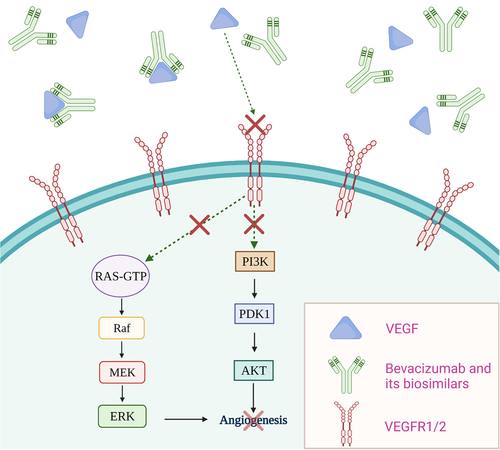
- Reference products in biosimilar trials were ranibizumab in seven and aflibercept in two studies [S6].
- Aflibercept biosimilars. A meta-analysis of 11 RCTs (4064 participants) found no significant differences in visual acuity change, central subfield thickness, anti-drug antibodies or adverse events in nAMD or DMO [S8].
- Ranibizumab biosimilar example. In a phase 3 equivalence trial of SB11 (705 participants), visual and anatomical outcomes were equivalent, serious adverse events were 12.6% vs 12.4%, and anti-drug antibodies were 3.0% vs 3.1% [S5].
- Bevacizumab biosimilars. In an Indian randomised study of 123 patients with DMO, two bevacizumab biosimilars gave similar acuity and thickness improvements to the originator and were cost-effective [S7].
- Off-label bevacizumab. Across 17 trials, no agent had a clear advantage for effectiveness or safety; aflibercept and ranibizumab were significantly less cost-effective than repackaged bevacizumab in two trials [S3].
Confirm it: judging the evidence
- Biosimilar trials were all industry-supported but judged to be of high methodological standard [S6].
- Evidence is thinner for aflibercept biosimilars than ranibizumab biosimilars in the Cochrane review [S6].
- One DMO trial reported more arterial thrombotic events with ranibizumab than aflibercept [S3]; in a 660-participant DMO RCT, APTC events were 5%, 8% and 12% with aflibercept, bevacizumab and ranibizumab, warranting further evaluation [S2].
Manage it: choosing a product
Before acting on this section, check the national and local guidelines, product information and regulatory approvals that apply where you practise. See the medical disclaimer.
Tier A (primary care / no specialist)
- Tier A does not give injections. Refer patients with suspected nAMD or DMO; explain that lower-cost options exist and give similar results in trials [S4] [S6].
Tier B (general eye clinic)
- Where cost limits access, bevacizumab is a reasonable first choice in nAMD on efficacy grounds [S4], and was the most cost-effective strategy in the UK IVAN trial [S1].
- Biosimilars may be a viable alternative to reference products [S6].
- Doses used in trials, as reported in [S2]: aflibercept 2.0 mg, repackaged bevacizumab 1.25 mg and ranibizumab 0.3 mg for DMO; as reported in [S1]: ranibizumab 0.5 mg or bevacizumab 1.25 mg for nAMD. For practice, follow product labelling and local formularies.
- Repackaged (compounded) bevacizumab was used in the DMO comparative RCT [S2]; compounding standards are not covered by these sources.
Tier C (specialist centre)
- In DMO with worse baseline vision (20/50 to 20/320), consider aflibercept where available, given its better 2-year results vs bevacizumab [S2].
- Retinopathy of prematurity. A systematic review of 5 studies (382 eyes) found an overall adverse event rate of 0.5% and pooled success of 65% with bevacizumab biosimilars and 46% with ranibizumab biosimilars; RCTs against reference products are needed [S10].
- Use cost-effectiveness data with care: estimates vary with model perspective, time horizon and assumptions [S9].
Refer when
| Situation | Urgency |
|---|---|
| Pain, redness or reduced vision after an injection (any product) | Immediate, same-day to the injecting service [S6] |
| New distortion or central vision loss suggesting nAMD | Urgent to a retina service; timing per your local service or specialist advice |
| Centre-involving DMO with reduced vision | Within a week to a retina service [EIC expert opinion] |
Pitfalls
- Assuming biosimilar long-term safety is established [S6].
- Assuming all anti-VEGF agents are interchangeable in DMO with poor baseline vision [S2].
- Comparing cost-effectiveness studies without checking their assumptions [S9].
- Extrapolating ROP biosimilar results, which come from small non-randomised data [S10].
Evidence notes
| Source | Date | Design |
|---|---|---|
| [S1] | 2014 | Cost-utility analysis within the IVAN RCT, 610 patients |
| [S2] | 2016 | Comparative effectiveness RCT, 660 participants |
| [S3] | 2019 | Systematic review and meta-analysis, 17 trials |
| [S4] | 2019 | Cochrane systematic review, 16 RCTs |
| [S5] | 2021 | Phase 3 equivalence RCT, 705 participants |
| [S6] | 2024 | Cochrane systematic review, 9 RCTs |
| [S7] | 2024 | Randomised study, 123 patients (India) |
| [S8] | 2026 | Meta-analysis of 11 RCTs |
| [S9] | 2026 | Systematic review of 22 economic studies |
| [S10] | 2026 | Systematic review, 5 studies |
| [S11] | 2026 | Meta-analysis, 25 studies (RCTs and observational) |
- All biosimilar RCTs in the Cochrane review were industry-supported [S6]. The SB11 trial was an equivalence design over 48 weeks [S5].
- The Cochrane anti-VEGF review notes trials were too small to estimate differences in rare safety outcomes [S4].
- Cost data from IVAN reflect the UK NHS in 2014 and may not transfer to other settings [S1].
- Not covered by these sources: regulatory approval status by country, switching between biosimilars, interchangeability rules, and aseptic compounding of bevacizumab.
Related articles
References
See the numbered source list below. Each marker [S#] links to its PubMed and DOI record.
Sources
- [S1] Dakin HA, Wordsworth S, Rogers CA, Abangma G, Raftery J, Harding SP, et al. Cost-effectiveness of ranibizumab and bevacizumab for age-related macular degeneration: 2-year findings from the IVAN randomised trial. BMJ open. (2014). PubMed 25079928 · doi:10.1136/bmjopen-2014-005094
- [S2] Wells JA, Glassman AR, Ayala AR, Jampol LM, Bressler NM, Bressler SB, et al. Aflibercept, Bevacizumab, or Ranibizumab for Diabetic Macular Edema: Two-Year Results from a Comparative Effectiveness Randomized Clinical Trial. Ophthalmology. (2016). PubMed 26935357 · doi:10.1016/j.ophtha.2016.02.022
- [S3] Low A, Faridi A, Bhavsar KV, Cockerham GC, Freeman M, Fu R, et al. Comparative effectiveness and harms of intravitreal antivascular endothelial growth factor agents for three retinal conditions: a systematic review and meta-analysis. The British journal of ophthalmology. (2019). PubMed 30409915 · doi:10.1136/bjophthalmol-2018-312691
- [S4] Solomon SD, Lindsley K, Vedula SS, Krzystolik MG, Hawkins BS Anti-vascular endothelial growth factor for neovascular age-related macular degeneration. The Cochrane database of systematic reviews. (2019). PubMed 30834517 · doi:10.1002/14651858.cd005139.pub4
- [S5] Woo SJ, Veith M, Hamouz J, Ernest J, Zalewski D, Studnicka J, et al. Efficacy and Safety of a Proposed Ranibizumab Biosimilar Product vs a Reference Ranibizumab Product for Patients With Neovascular Age-Related Macular Degeneration: A Randomized Clinical Trial. JAMA ophthalmology. (2021). PubMed 33211076 · doi:10.1001/jamaophthalmol.2020.5053
- [S6] Sunaga T, Maeda M, Saulle R, Ng SM, Sato MT, Hasegawa T, et al. Anti-vascular endothelial growth factor biosimilars for neovascular age-related macular degeneration. The Cochrane database of systematic reviews. (2024). PubMed 38829176 · doi:10.1002/14651858.cd015804.pub2
- [S7] Virani S, Bhatiwal A, Rewri P Efficacy, safety, and cost-effectiveness of biosimilars of bevacizumab in näive patients with diabetic macular edema. Indian journal of pharmacology. (2024). PubMed 39250621 · doi:10.4103/ijp.ijp_58_24
- [S8] Rashid M, Azeem S, Shahid IF, Ali MKB, Shahid F, Fatima A, et al. Efficacy and safety of aflibercept biosimilars compared to reference aflibercept for retinal diseases: A systematic review and meta-analysis. Survey of ophthalmology. (2026). PubMed 41232694 · doi:10.1016/j.survophthal.2025.11.007
- [S9] Paneerselvam GS, Ng JW, Lim JS, Lee KK Cost-Effectiveness of Vascular Endothelial Growth Factor Inhibitors in the Management of Wet Age-Related Macular Degeneration: A Systematic Review. Value in health regional issues. (2026). PubMed 41297526 · doi:10.1016/j.vhri.2025.101542
- [S10] Tsivitanidou E, Shakeel A, Warda O The Safety and Efficacy of Anti-Vascular Endothelial Growth Factor Biosimilars in Retinopathy of Prematurity. Acta paediatrica (Oslo, Norway : 1992). (2026). PubMed 41340197 · doi:10.1111/apa.70400
- [S11] Pandya BU, Mihalache A, Huang RS, Jhaveri A, Cao X, Ballios BG, et al. EFFECTIVENESS AND SAFETY OF BIOSIMILAR ANTIVASCULAR ENDOTHELIAL GROWTH FACTOR FOR RETINAL DISEASES: A Systematic Review and Meta-Analysis. Retina (Philadelphia, Pa.). (2026). PubMed 41707077 · doi:10.1097/iae.0000000000004807