Educational content only. Not personalised medical advice. Clinical decisions remain the responsibility of the treating clinician.
Leber Hereditary Optic Neuropathy
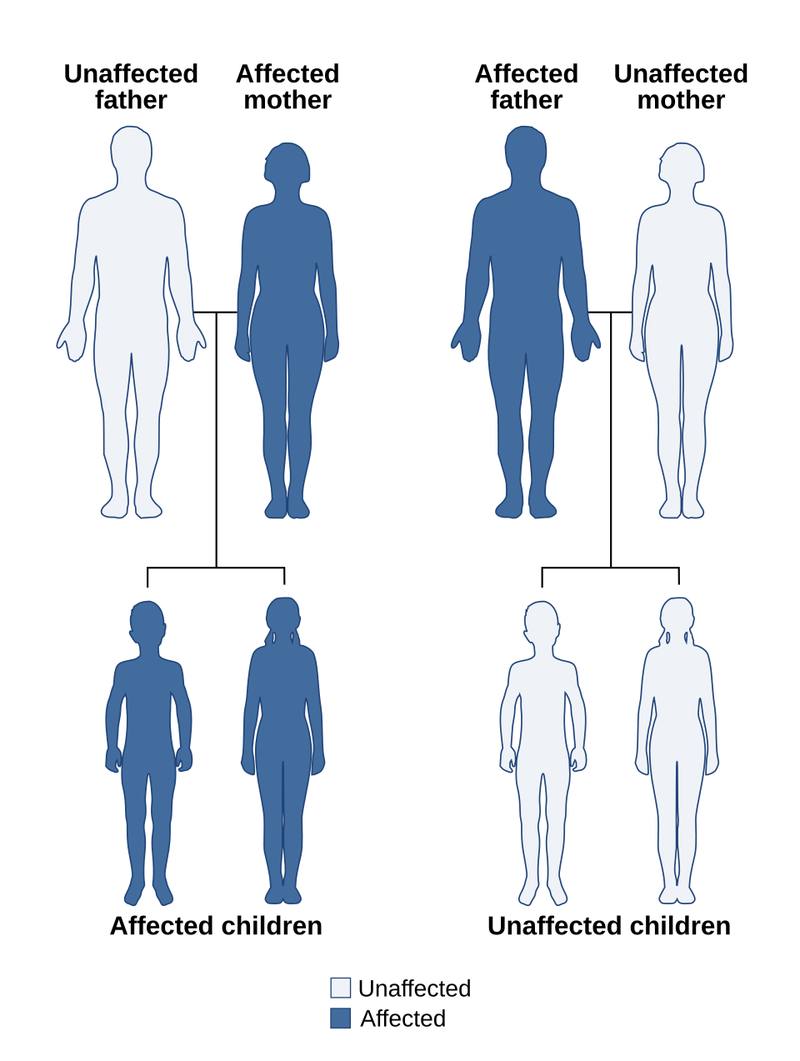
Leber hereditary optic neuropathy (LHON) is a maternally inherited mitochondrial disease that destroys retinal ganglion cells and causes bilateral, painless, subacute central visual loss in young adults [S5] [S6]. It is estimated as the most frequent mitochondrial disease (1 in 27,000 to 45,000) [S2]. Idebenone is approved in Europe under exceptional circumstances, and intravitreal gene therapy for the m.11778G>A variant has shown modest benefit [S2] [S10] [S12].
Key points - Most patients carry one of three primary mtDNA variants: m.3460G>A (MT-ND1), m.11778G>A (MT-ND4) or m.14484T>C (MT-ND6) [S3]; diagnosis rests on a consistent history and/or genetic testing for these variants [S6]. - Men are about 4 times more likely to be affected than women; peak onset is in the second and third decades [S6]. - Idebenone appears most useful when started early and continued for at least 24 months; effect varies with disease stage and variant [S10]. - Gene therapy (lenadogene nolparvovec) improved acuity modestly in a meta-analysis of three RCTs, but did not significantly increase responder rates [S12]. - Counsel carriers and patients to avoid smoking and alcohol, and offer low-vision services [S1].
Evidence last checked: 2026-10-17 (PubMed abstracts).
Red flags
- Second eye involvement: in unilateral cases the other eye is usually affected 2 to 3 months later [S6].
- Young man with painless central loss, even with a hyperaemic, swollen-looking disc, which can occur in subacute LHON [S6].
- m.3460G>A in the subacute or dynamic phase: possible clinical worsening with idebenone; use caution [S10].
- Other neurological symptoms: some patients have neurological sequelae beyond vision loss [S1].
Recognise it
- Painless, subacute visual loss in young adults; both eyes are affected simultaneously in about 25-50% [S6].
- Acuity falls to counting fingers or worse with a dense central or centrocaecal scotoma [S6].
- In the subacute phase the disc may look hyperaemic with swelling of the peripapillary nerve fibre layer, peripapillary telangiectasias and vascular tortuosity; macular OCT shows marked ganglion cell complex thinning even at this stage [S6].
- Most patients worsen over the months after onset; few regain some vision after about 1 year [S5]. Most remain legally blind, but a small proportion recover partially, often within the first year [S1].
- Mutation carriers remain unaffected until an unknown trigger causes vision loss [S5]; male carriers are more affected than female carriers [S1].
Confirm it
- Molecular genetic testing for the three common mtDNA variants [S6].
- OCT of the macular ganglion cell layer and nerve fibre layer [S6]; thicker baseline layers predicted better acuity after gene therapy in eyes treated at least 6 months after onset [S11].
- Exclusion of other causes; differential diagnosis is not detailed in these abstracts.
Manage it
Before acting on this section, check the national and local guidelines, product information and regulatory approvals that apply where you practise. See the medical disclaimer.
Tier A (primary care / no specialist)
- Refer young adults with painless loss of central vision in one or both eyes to an eye service [S6].
- Advise against smoking and alcohol, which are risk factors for further vision loss [S1].
Tier B (general eye clinic)
- Document acuity, fields and OCT; arrange genetic testing where available [S6].
- Watch the fellow eye closely in unilateral cases [S6].
- Offer low-vision services and counselling; treatment is largely supportive [S1].
- Explain maternal inheritance and the higher risk in male relatives [S1] [S5].
Tier C (specialist centre)
- Idebenone: - The 2017 international consensus (Europe and North America) addressed target population, timing and dosing, which were unclear at approval [S2]. - LEROS (open-label, natural history-controlled, 199 patients up to 5 years from onset) met its primary end point; dose as reported in [S8]: 900 mg/day over 24 months. Benefit varied with disease phase and variant [S8]. - Favourable outcomes are associated with m.11778G>A and with chronic eyes carrying m.14484T>C [S10].
- Gene therapy (lenadogene nolparvovec), studied in the m.11778G>A variant [S7]: - REVERSE (37 patients, vision loss 6 to 12 months): treated eyes improved by +15 letters and sham eyes by +13 letters at week 96; the primary end point was not met. Viral vector DNA transfer to the fellow eye in primates may explain bilateral improvement [S4]. - REFLECT (98 patients): bilateral injection did not improve the second eye significantly more than placebo at 1.5 years; intraocular inflammation, mostly mild, occurred in 70.7% of treated vs 10.2% of placebo eyes [S7]. - RESTORE (5-year follow-up, 62 patients): sustained bilateral improvement from nadir of about +4 lines in treated and sham eyes; 66.1% gained at least 3 lines from nadir in at least one eye [S9]. - Pooled data vs an external natural history cohort suggest sustained, modest bilateral benefit when treated within 1 year of onset in patients aged 15 or more [S10].
- In chronic disease over 1 year, no treatment that restores vision has yet been found [S5].
Refer when
| Situation | Urgency |
|---|---|
| Painless subacute central loss in a young adult, cause unknown | Urgent; timing per your local service or specialist advice; early idebenone may matter [S10] |
| Known LHON with new loss in the fellow eye | Urgent; timing per your local service or specialist advice [S6] |
| Unaffected maternal relatives of a patient | Routine, for counselling; timing per your local service or specialist advice [S1] |
Pitfalls
- Waiting for the second eye before considering LHON [S6].
- Assuming the same idebenone response for every variant [S10].
- Interpreting fellow-eye improvement after unilateral gene therapy as no effect, or as proof of effect: both eyes improve [S4] [S9].
- Forgetting lifestyle advice for carriers [S1].
Evidence notes
| Source | Date | Design |
|---|---|---|
| [S1] | 2015 | Narrative review |
| [S2] | 2017 | International expert consensus statement |
| [S3] | 2021 | Narrative review |
| [S4] | 2020 | Phase 3 sham-controlled RCT (REVERSE), 37 patients |
| [S5] | 2021 | Narrative review |
| [S6] | 2022 | Narrative review |
| [S7] | 2023 | Phase 3 placebo-controlled RCT (REFLECT), 98 patients |
| [S8] | 2024 | Open-label trial with external natural history control |
| [S9] | 2025 | 5-year follow-up of RESCUE and REVERSE |
| [S10] | 2025 | Narrative review of clinical trials |
| [S11] | 2025 | Exploratory analysis of three phase 3 studies |
| [S12] | 2026 | Meta-analysis of 3 RCTs, 175 patients |
- Conflict and limitation: the gene therapy RCTs did not meet their primary end points because sham or placebo fellow eyes also improved [S4] [S7]; benefit claims rest on comparison with external natural history cohorts [S9] [S10]. The meta-analysis found acuity benefit but no increase in responder rate [S12].
- LEROS was not randomised and used an external control [S8]. Several trials were led by overlapping investigator groups; funding was not stated in most abstracts.
- Availability and approval of idebenone and gene therapy differ by country and were not covered; check your national regulator.
- Not covered by these sources: visual outcome by variant in figures, prevalence outside Europe and North America, and cost.
Related articles
- Nutritional and Toxic Optic Neuropathy
- Retinal Gene Therapy, CRISPR and Mutation-Agnostic Treatments
References
See the numbered source list below. Each marker [S#] links to its PubMed and DOI record.
Sources
- [S1] Meyerson C, Van Stavern G, McClelland C Leber hereditary optic neuropathy: current perspectives. Clinical ophthalmology (Auckland, N.Z.). (2015). PubMed 26170609 · doi:10.2147/opth.s62021
- [S2] Carelli V, Carbonelli M, de Coo IF, Kawasaki A, Klopstock T, Lagrèze WA, et al. International Consensus Statement on the Clinical and Therapeutic Management of Leber Hereditary Optic Neuropathy. Journal of neuro-ophthalmology : the official journal of the North American Neuro-Ophthalmology Society. (2017). PubMed 28991104 · doi:10.1097/wno.0000000000000570
- [S3] Sundaramurthy S, SelvaKumar A, Ching J, Dharani V, Sarangapani S, Yu-Wai-Man P Leber hereditary optic neuropathy-new insights and old challenges. Graefe's archive for clinical and experimental ophthalmology = Albrecht von Graefes Archiv fur klinische und experimentelle Ophthalmologie. (2021). PubMed 33185731 · doi:10.1007/s00417-020-04993-1
- [S4] Yu-Wai-Man P, Newman NJ, Carelli V, Moster ML, Biousse V, Sadun AA, et al. Bilateral visual improvement with unilateral gene therapy injection for Leber hereditary optic neuropathy. Science translational medicine. (2020). PubMed 33298565 · doi:10.1126/scitranslmed.aaz7423
- [S5] Hage R, Vignal-Clermont C Leber Hereditary Optic Neuropathy: Review of Treatment and Management. Frontiers in neurology. (2021). PubMed 34122299 · doi:10.3389/fneur.2021.651639
- [S6] Stramkauskaitė A, Povilaitytė I, Glebauskienė B, Liutkevičienė R Clinical Overview of Leber Hereditary Optic Neuropathy. Acta medica Lituanica. (2022). PubMed 36061944 · doi:10.15388/amed.2022.29.1.19
- [S7] Newman NJ, Yu-Wai-Man P, Subramanian PS, Moster ML, Wang AG, Donahue SP, et al. Randomized trial of bilateral gene therapy injection for m.11778G>A MT-ND4 Leber optic neuropathy. Brain : a journal of neurology. (2023). PubMed 36350566 · doi:10.1093/brain/awac421
- [S8] Yu-Wai-Man P, Carelli V, Newman NJ, Silva MJ, Linden A, Van Stavern G, et al. Therapeutic benefit of idebenone in patients with Leber hereditary optic neuropathy: The LEROS nonrandomized controlled trial. Cell reports. Medicine. (2024). PubMed 38428428 · doi:10.1016/j.xcrm.2024.101437
- [S9] Yu-Wai-Man P, Newman NJ, Biousse V, Carelli V, Moster ML, Vignal-Clermont C, et al. Five-Year Outcomes of Lenadogene Nolparvovec Gene Therapy in Leber Hereditary Optic Neuropathy. JAMA ophthalmology. (2025). PubMed 39699886 · doi:10.1001/jamaophthalmol.2024.5375
- [S10] Chen BS, Newman NJ Clinical trials in Leber hereditary optic neuropathy: outcomes and opportunities. Current opinion in neurology. (2025). PubMed 39704163 · doi:10.1097/wco.0000000000001343
- [S11] Sergott RC, Carelli V, Newman NJ, Biousse V, Yu-Wai-Man P, Vignal-Clermont C, et al. Predictors of Final Visual Outcome in Patients With Leber Hereditary Optic Neuropathy Treated With Lenadogene Nolparvovec Gene Therapy. Investigative ophthalmology & visual science. (2025). PubMed 40662892 · doi:10.1167/iovs.66.9.42
- [S12] Alghamdi LN, Alsudais AS, Almarwani SH, Alraddadi RA, Alsamadani AH, Alnamlah AA, et al. Gene Therapy for Leber Hereditary Optic Neuropathy (LHON): A Systematic Review and Meta-Analysis. Neuro-ophthalmology (Aeolus Press). (2026). PubMed 42131170 · doi:10.1080/01658107.2026.2624440