Educational content only. Not personalised medical advice. Clinical decisions remain the responsibility of the treating clinician.
Effective cataract surgical coverage and outcomes
Effective cataract surgical coverage (eCSC) tracks both the uptake and the quality of cataract surgery, and WHO Member States endorsed global 2030 targets for it in 2021 [S8]. In many countries eCSC falls well below crude cataract surgical coverage (CSC), showing that surgery is reaching people but not always restoring good vision [S10] [S12]. Cost, awareness, gender and system capacity are the recurring barriers [S11].
Key points - eCSC and effective refractive error coverage were proposed as indicators of progress towards universal health coverage in eye care [S8]. - In India pooled CSC was 57% but eCSC only 36%, a relative quality gap of 37% [S12]. - Average CSC was around 50% or lower in most countries, and the cataract surgical rate ranged from 36 to 12 800 per million population [S10]. - Women had lower access to cataract surgery in India and South Asia [S4] [S6], but no gender difference was found in Latin America [S9]. - In one cluster RCT in rural China, waiving the surgical fee increased uptake (RR 1.94; low-certainty evidence), whereas information and counselling alone had little or no effect [S3].
Evidence last checked: 2026-10-17 (PubMed abstracts).
Red flags: signs that need urgent action
- A large gap between CSC and eCSC: surgery is being done but outcomes are poor; quality improvement must accompany efforts to increase coverage [S12].
- Low coverage in a region: the Northeast of India had CSC 36% and eCSC 23% [S12]; CSC at 3/60 was 24.1% in Peru and eCSC 14.8% in Guatemala [S7].
- Women left behind: in Africa CSC was lower in females in 88.2% of studies [S2]; in India women had 69% higher odds of being cataract blind [S4].
- Low intraocular lens (IOL) use: good visual outcomes correlated with IOL use in sub-Saharan Africa [S1].
- Service disruption: COVID-19 reduced cataract surgery rates in many countries [S10].
Recognise it: the indicators
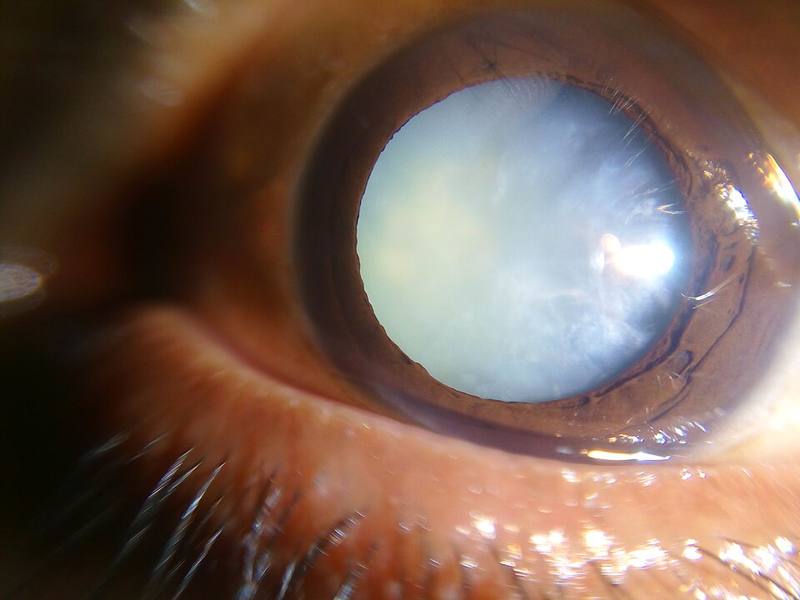
- CSC is a coverage measure reported at visual acuity thresholds such as <3/60 and <6/18, per person or per eye [S6] [S9].
- eCSC is designed to track both uptake and quality of cataract services; WHO convened expert consultations to standardise its definitions and measurement [S8]. In many countries it deviates from CSC [S10].
- Relative quality gap (RQG) expresses how much of CSC is lost to poor outcomes [S12].
- Cataract surgical rate (CSR) counts operations per million population and can be calculated from ministry of health surgical numbers [S7] [S10].
- Burden: cataract was the principal cause of blindness in 15 of 17 sub-Saharan African surveys [S1] and caused 29.8% to 77.6% of blindness in Latin American studies [S7].
Confirm it: measuring coverage
- The Rapid Assessment of Avoidable Blindness (RAAB) is a relatively simple, low-cost survey of the prevalence and causes of visual loss; at least 331 had been done in 79 countries [S5].
- RAAB is moving to mobile, cloud-based data collection with more emphasis on using the data for planning [S5].
- RAAB and Rapid Assessment of Cataract Surgical Services data can be reanalysed to calculate sex inequality in CSC and eCSC [S7].
- High heterogeneity between surveys within one country supports district-level analysis rather than a single national figure [S12].
Manage it: improving coverage and quality at each resource tier
Before acting on this section, check the national and local guidelines, product information and regulatory approvals that apply where you practise. See the medical disclaimer.
Tier A (primary care / no specialist)
- Identify people with vision-impairing cataract in the community and refer them; weak referral pathways and inconsistent outreach are community-level barriers [S11].
- Address costs and fear: direct and indirect costs, limited awareness and fear of poor outcomes are the commonest patient-level barriers [S11].
- Make a deliberate effort to reach women [S2] [S4] [S6].
Tier B (general eye clinic)
- Use IOLs, given their link with good visual outcomes [S1].
- Audit your own visual outcomes; a gap between CSC and eCSC reflects surgical quality [S10] [S12].
- Reduce financial barriers where possible: fee waivers increased uptake in one trial [S3]; transport support and subsidies are recommended by a 2025 review [S11].
Tier C (specialist centre and planners)
- Track eCSC alongside CSC, since 2030 targets are set for eCSC [S8].
- Run district-focused planning and target low-coverage regions [S12].
- Invest in workforce, theatre capacity, equipment and consumables, and scheduling, the main system-level barriers [S11].
- Train ophthalmologists, distribute human resources better and include vision services in universal health coverage [S7].
- Government insurance support and suitable services can increase cataract surgery [S10].
Refer when
| Situation | Urgency |
|---|---|
| Vision-impairing cataract found in a community or primary care check | Routine to a cataract service; timing per your local service or specialist advice |
| Pain, redness or worsening vision after cataract surgery | Same-day to the operating eye unit [G1] |
| Poor vision persisting after surgery | Urgent for review at the operating unit; timing per your local service or specialist advice |
Pitfalls
- Counting operations without measuring outcomes [S10] [S12].
- Reporting one national figure that hides regional gaps [S12].
- Assuming information alone will raise uptake [S3].
- Ignoring gender: patterns differ by region [S4] [S9].
- Focusing on one barrier when they are multifactorial and interlinked [S11].
Evidence notes
| Source | Date | Design |
|---|---|---|
| [S1] | 2013 | Systematic review of 17 surveys, sub-Saharan Africa |
| [S2] | 2016 | Systematic review, Africa |
| [S3] | 2017 | Cochrane systematic review, 2 cluster RCTs (rural China) |
| [S4] | 2020 | Systematic review and meta-analysis, 22 studies, India |
| [S5] | 2019 | Narrative review of the RAAB method |
| [S6] | 2020 | Meta-analysis, 16 cross-sectional studies, South Asia |
| [S7] | 2021 | Systematic review, Latin America |
| [S8] | 2021 | WHO-convened expert consultation report |
| [S9] | 2022 | Meta-analysis of 19 RAAB studies, Latin America |
| [S10] | 2025 | Narrative review |
| [S11] | 2025 | Systematic review, 108 studies, Africa |
| [S12] | 2026 | Systematic review and meta-analysis, India |
- Intervention evidence is very thin: only two trials, both in rural China, with unclear risk of bias and no data on coverage or outcomes [S3].
- Gender findings conflict by region: female disadvantage in India and South Asia [S4] [S6], none in Latin America [S9], where median gender inequality in CSC and eCSC was below 1% [S7].
- Most other sources are cross-sectional surveys and narrative reviews.
- Not covered by these sources: the exact eCSC formula and visual outcome threshold, the numerical 2030 target, and outcome monitoring tools.
Related articles
References
See the numbered source list below. Each marker [S#] links to its PubMed and DOI record.
Sources
- [S1] Bastawrous A, Dean WH, Sherwin JC Blindness and visual impairment due to age-related cataract in sub-Saharan Africa: a systematic review of recent population-based studies. The British journal of ophthalmology. (2013). PubMed 23696652 · doi:10.1136/bjophthalmol-2013-303135
- [S2] Aboobaker S, Courtright P Barriers to Cataract Surgery in Africa: A Systematic Review. Middle East African journal of ophthalmology. (2016). PubMed 26957856 · doi:10.4103/0974-9233.164615
- [S3] Ramke J, Petkovic J, Welch V, Blignault I, Gilbert C, Blanchet K, et al. Interventions to improve access to cataract surgical services and their impact on equity in low- and middle-income countries. The Cochrane database of systematic reviews. (2017). PubMed 29119547 · doi:10.1002/14651858.cd011307.pub2
- [S4] Prasad M, Malhotra S, Kalaivani M, Vashist P, Gupta SK Gender differences in blindness, cataract blindness and cataract surgical coverage in India: a systematic review and meta-analysis. The British journal of ophthalmology. (2020). PubMed 31221669 · doi:10.1136/bjophthalmol-2018-313562
- [S5] Mactaggart I, Limburg H, Bastawrous A, Burton MJ, Kuper H Rapid Assessment of Avoidable Blindness: looking back, looking forward. The British journal of ophthalmology. (2019). PubMed 31266777 · doi:10.1136/bjophthalmol-2019-314015
- [S6] Ye Q, Chen Y, Yan W, Wang W, Zhong J, Tang C, et al. Female Gender Remains a Significant Barrier to Access Cataract Surgery in South Asia: A Systematic Review and Meta-Analysis. Journal of ophthalmology. (2020). PubMed 32411426 · doi:10.1155/2020/2091462
- [S7] Reis T, Lansingh V, Ramke J, Silva JC, Resnikoff S, Furtado JM Cataract as a Cause of Blindness and Vision Impairment in Latin America: Progress Made and Challenges Beyond 2020. American journal of ophthalmology. (2021). PubMed 33412124 · doi:10.1016/j.ajo.2020.12.022
- [S8] Keel S, Müller A, Block S, Bourne R, Burton MJ, Chatterji S, et al. Keeping an eye on eye care: monitoring progress towards effective coverage. The Lancet. Global health. (2021). PubMed 34237266 · doi:10.1016/s2214-109x(21)00212-6
- [S9] Lansingh VC, Carter MJ, Eckert KA Meta-analysis of gender inequities in cataract surgical coverage in Latin America. Cirugia y cirujanos. (2022). PubMed 35120105 · doi:10.24875/ciru.20001240
- [S10] Hashemi H, Fayaz F, Hashemi A, Khabazkhoob M Global prevalence of cataract surgery. Current opinion in ophthalmology. (2025). PubMed 39638415 · doi:10.1097/icu.0000000000001092
- [S11] Naidoo K, Hansen W Barriers to cataract surgery uptake in Africa: a systematic review. International ophthalmology. (2025). PubMed 41385021 · doi:10.1007/s10792-025-03890-y
- [S12] Pardeshi GS, Khan MF, Gupta PC, Iyer VA, Goyal C, Gandhi AP Regional disparities in effective cataract surgical coverage and relative quality gap in India: A systematic review and meta-analysis. Indian journal of ophthalmology. (2026). PubMed 41460124 · doi:10.4103/ijo.ijo_130_25
Guidelines
- [G1] NHS Scotland (Community Eyecare Guidelines, eyes.nhs.scot). 7.4 Endophthalmitis, Post-Operative, (Exogenous Endophthalmitis) (2026). https://www.eyes.nhs.scot/eyecare-guidelines/section-7-uvea/74-endophthalmitis-post-operative-exogenous-endophthalmitis/