Educational content only. Not personalised medical advice. Clinical decisions remain the responsibility of the treating clinician.
Vogt-Koyanagi-Harada Disease
Vogt-Koyanagi-Harada (VKH) disease is a rare multisystem autoimmune disease directed against melanocytes, affecting the eye, inner ear, meninges and skin, with bilateral uveitis at its core [S2]. It is a primary stromal choroiditis that spills over into panuveitis [S4]. Early, vigorous and sustained treatment at initial onset can prevent chronic disease and sunset glow fundus, whereas delayed treatment risks chronic uveitis and permanent visual impairment [S6] [S12].
Key points - Treat initial-onset disease early and aggressively with systemic corticosteroids [S2] [S3]; expert reviews favour adding non-steroidal immunosuppression from the start [S6] [S7]. - Pooled observational data: chronic evolution in 44% after corticosteroids alone vs 2.3% with immediate dual therapy [S6]. - Chronic recurrent VKH is more refractory, has more complications and poorer outcomes than initial-onset acute disease [S5]. - OCT shows exudative retinal detachment and choroidal thickening in the acute stage and choroidal thinning in the chronic stage [S3]. - Atypical central serous chorioretinopathy (CSCR) can be misdiagnosed as VKH; giving steroids for CSCR can cause permanent visual loss [S1].
Evidence last checked: 2026-10-17 (PubMed abstracts).
Red flags
- Bilateral serous retinal detachments with disc oedema and vitritis [S3]: a pattern that needs prompt treatment to avoid complications [S3].
- Delay in diagnosis. Delayed diagnosis and treatment lead to chronic uveitis and permanent visual impairment [S12]; the "therapeutic window of opportunity" is emphasised [S6].
- Serous detachment that could be CSCR. Ask about corticosteroid use; misdiagnosis leads to inappropriate steroids and permanent visual loss [S1].
- Exclude infection. Diagnosis requires bilateral involvement and ruling out other conditions such as tuberculosis [S10].
- Cancer immunotherapy. PD-1 inhibitors can cause VKH-like uveitis [S12].
Recognise it
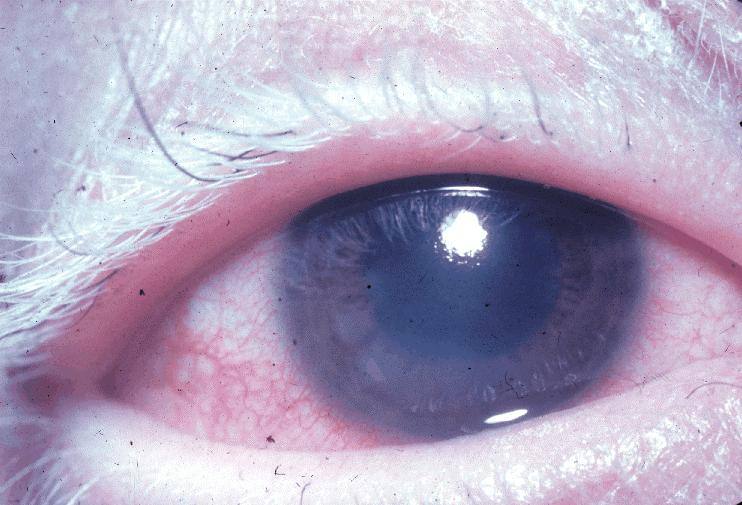
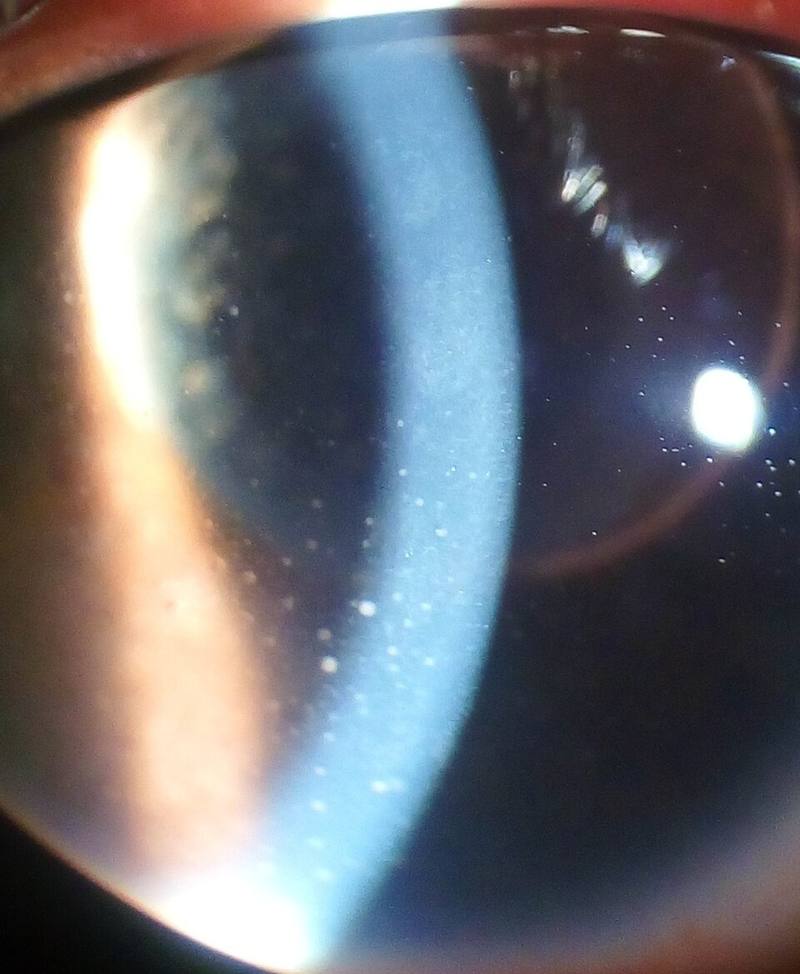
- Who. People with darker skin pigmentation, most often Asians, Native Americans and Hispanics; usually aged 20 to 50 years, female:male ratio 2:1 [S2]. HLA-DRB1*0405 is the main susceptibility allele [S2].
- Phases. Prodromal, uveitic, convalescent and recurrent [S3]. It often begins with vague viral-like systemic symptoms [S2].
- Eye. Severe bilateral granulomatous inflammation with serous retinal detachments, disc oedema and vitritis, later sunset glow fundus [S3].
- Outside the eye. Headache, meningismus, hearing loss, poliosis, vitiligo [S3] and alopecia [S2].
- Key mimic. Atypical CSCR can be misdiagnosed as an inflammatory serous detachment, mainly VKH [S1].
Confirm it
- OCT shows exudative detachments and choroidal thickening (acute) and choroidal thinning (chronic) [S3].
- ICGA and enhanced-depth OCT. Diffuse choroiditis on ICGA and/or EDI-OCT is proposed as the essential criterion for initial-onset disease and the method of choice for monitoring [S7]. Hypofluorescent dark dots, RPE undulations and flow voids are key imaging features [S11].
- Other modalities: colour photography, fluorescein angiography and B-scan ultrasonography also contribute; access to advanced modalities varies [S11].
- OCTA shows reduced retinal and choriocapillaris vessel density in active disease and may help follow-up [S9].
Manage it
Before acting on this section, check the national and local guidelines, product information and regulatory approvals that apply where you practise. See the medical disclaimer.
Tier A (primary care / no specialist)
- A patient with headache or viral-like illness followed by blurred vision in both eyes, or with hearing loss, poliosis or vitiligo and eye symptoms, needs eye assessment (timing in the table below) [S2] [S3].
Tier B (general eye clinic)
- Confirm bilateral posterior involvement with OCT or B-scan, and exclude tuberculosis and other mimics [S10] [S11].
- Start systemic corticosteroids early and aggressively [S2] [S3]. Steroid pulse therapy controls inflammation but carries risks of hypertension, infection and electrolyte imbalance [S10]. Doses are not covered by these abstracts: follow local protocols.
- Add a non-steroidal immunosuppressant at onset where possible; chronic evolution fell from 61% with corticosteroid monotherapy to 2% with combined therapy in international series [S4].
Tier C (specialist centre)
- Which immunosuppressant. In a Chinese RCT of 110 patients (75% late-phase), a cyclosporine-based strategy was non-inferior to an adalimumab-based strategy for vision at 26 weeks (11.2 vs 6.3 letters), with fewer serious adverse events (0.70 vs 1.21 per patient-year) [S8]. Both arms used a non-standard corticosteroid regimen [S8].
- Monitor subclinical choroiditis with ICGA and EDI-OCT; most patients could stop treatment without relapse in several studies [S7].
- Chronic recurrent disease needs prognosis-aware planning because it is more refractory [S5].
- Complications. Sunset glow fundus, cataract, glaucoma, subretinal fibrosis and choroidal neovascularisation [S3]; intravitreal corticosteroid may be needed for ocular complications [S2].
- Pregnancy. Needs a multidisciplinary approach; corticosteroids can cause infection, fetal growth restriction and possible neurodevelopmental effects [S10].
Refer when
| Situation | Urgency |
|---|---|
| Bilateral serous retinal detachments or disc oedema with uveitis | Same-day to an eye specialist able to start systemic treatment [EIC expert opinion] [S3] [S6] |
| Known VKH with recurrence, or not controlled on corticosteroids | Urgent to a uveitis specialist; timing per your local service or specialist advice [S5] |
Pitfalls
- Treating initial-onset VKH with a short or low-intensity steroid course alone [S4] [S6].
- Calling atypical CSCR "VKH" and giving steroids [S1].
- Assuming Japanese outcomes apply everywhere: chronic evolution after corticosteroids alone was less frequent in Japan (25%), though sunset glow fundus still reached 61% [S4].
- Stopping follow-up when the fundus looks quiet; subclinical choroidal inflammation needs monitoring [S7].
Evidence notes
| Source | Date | Design |
|---|---|---|
| [S1] | 2012 | Narrative review |
| [S2] | 2013 | Systematic review of pathogenesis and therapy |
| [S3] | 2017 | Narrative review |
| [S4] | 2020 | Literature review, 20 studies |
| [S5] | 2020 | Literature review |
| [S6] | 2020 | Literature review, 20 studies, 974 patients |
| [S7] | 2022 | Expert review proposing diagnostic criteria |
| [S8] | 2023 | Non-inferiority RCT, 110 patients, China |
| [S9] | 2024 | Meta-analysis, 9 OCTA studies |
| [S10] | 2025 | Letter/review, pregnancy |
| [S11] | 2026 | Narrative review of imaging |
| [S12] | 2026 | Narrative review |
- The case for immediate dual therapy rests on comparisons across observational studies, not RCTs, and the authors note it is still contested [S6]; several reviews share authors [S4] [S6] [S7].
- The only RCT compared two immunosuppressive strategies, mainly in late-phase disease [S8].
- Not covered by these sources: corticosteroid and immunosuppressant doses, taper duration, and outcomes in Africa.
Related articles
References
See the numbered source list below. Each marker [S#] links to its PubMed and DOI record.
Sources
- [S1] Khairallah M, Kahloun R, Tugal-Tutkun I Central serous chorioretinopathy, corticosteroids, and uveitis. Ocular immunology and inflammation. (2012). PubMed 22409559 · doi:10.3109/09273948.2011.650776
- [S2] Greco A, Fusconi M, Gallo A, Turchetta R, Marinelli C, Macri GF, et al. Vogt-Koyanagi-Harada syndrome. Autoimmunity reviews. (2013). PubMed 23567866 · doi:10.1016/j.autrev.2013.01.004
- [S3] O'Keefe GA, Rao NA Vogt-Koyanagi-Harada disease. Survey of ophthalmology. (2017). PubMed 27241814 · doi:10.1016/j.survophthal.2016.05.002
- [S4] Herbort CP, Tugal-Tutkun I, Khairallah M, Abu El Asrar AM, Pavésio CE, Soheilian M Vogt-Koyanagi-Harada disease: recurrence rates after initial-onset disease differ according to treatment modality and geographic area. International ophthalmology. (2020). PubMed 32418076 · doi:10.1007/s10792-020-01417-1
- [S5] Urzua CA, Herbort C, Valenzuela RA, Abu El-Asrar AM, Arellanes-Garcia L, Schlaen A, et al. Initial-onset acute and chronic recurrent stages are two distinctive courses of Vogt-Koyanagi-Harada disease. Journal of ophthalmic inflammation and infection. (2020). PubMed 32924094 · doi:10.1186/s12348-020-00214-2
- [S6] Papasavvas I, Tugal-Tutkun I, Herbort CP Vogt-Koyanagi-Harada is a Curable Autoimmune Disease: Early Diagnosis and Immediate Dual Steroidal and Non-Steroidal Immunosuppression are Crucial Prerequisites. Journal of current ophthalmology. (2020). PubMed 33553831 · doi:10.4103/joco.joco_190_20
- [S7] Herbort CP, Tugal-Tutkun I, Abu-El-Asrar A, Gupta A, Takeuchi M, Fardeau C, et al. Precise, simplified diagnostic criteria and optimised management of initial-onset Vogt-Koyanagi-Harada disease: an updated review. Eye (London, England). (2022). PubMed 34145419 · doi:10.1038/s41433-021-01573-3
- [S8] Zhong Z, Dai L, Wu Q, Gao Y, Pu Y, Su G, et al. A randomized non-inferiority trial of therapeutic strategy with immunosuppressants versus biologics for Vogt-Koyanagi-Harada disease. Nature communications. (2023). PubMed 37355662 · doi:10.1038/s41467-023-39483-5
- [S9] Liang R, Geng J, Jiang H, Jin S, Wang X, Liu X Optical Coherence Tomography Angiography in Vogt-Koyanagi-Harada Patients: A Systematic Review and Meta-Analysis. Current eye research. (2024). PubMed 38456233 · doi:10.1080/02713683.2024.2327054
- [S10] Sundararaju U, Subramanian S, Rajakumar HK Steroid pulse therapy for VKH during pregnancy: a safe and effective option? Orphanet journal of rare diseases. (2025). PubMed 40671112 · doi:10.1186/s13023-025-03916-9
- [S11] Xia L, Chen L, Dai L, Zhang P, Cifuentes-González C, Gupta V, et al. Vogt-Koyanagi-Harada disease under the lens: Insights from multimodal ocular imaging. Progress in retinal and eye research. (2026). PubMed 41644040 · doi:10.1016/j.preteyeres.2026.101445
- [S12] Orłowska SM, Bednarczyk Ł, Morshed K, Tyniec M, Olczyk P Vogt-Koyanagi-Harada Syndrome: Clinical Features, Immunogenetic Predisposition and PD-1 Inhibitor-Induced Forms-A Comprehensive Review. Journal of clinical medicine. (2026). PubMed 42123224 · doi:10.3390/jcm15093490